


Tenants vs. Landlords: Who’s Responsible For Bond Cleaning?
A fresh start in a new home is always exciting, but leaving your current rental on the right note is just as important. Ensuring the property is clean and inspection ready plays a big role in getting your bond back. From spotless kitchen to dust free corners, every detail matters when preparing for that final walkthrough.
However, one question often creates confusion: who is actually responsible for bond cleaning, the tenant or the landlord? Understanding this can help avoid last minute stress and potential disputes. This article will let you know who is responsible for bond cleaning. Whether you are moving out or managing a rental; knowing how budget end of lease cleaning Geelong responsibilities are divided can make the entire process smoother and far more manageable.
Hide
Show
- Understanding Bond Cleaning Obligations
- The Role of the Lease Agreement in Defining Responsibilities
- Tenant Responsibilities at the End of a Lease
- Landlord Responsibilities and Expectations
- Common Disputes and How to Avoid Them
- When Professional Cleaning Becomes Necessary
- Infographic: Who is responsible for move out cleaning?
- Wrapping Up
1. Understanding Bond Cleaning Obligations
Bond cleaning, also known as end of lease cleaning, refers to thoroughly cleaning a rental property before vacating it. The primary goal is to return the property in the same condition it was in at the start of the tenancy, excluding fair wear and tear. This includes everything from scrubbing floors and cleaning appliances to removing stains and ensuring all areas are spotless.
In most tenancy agreements, tenants are responsible for completing this cleaning. The condition report created at the beginning of the lease acts as a reference point. If the property is not returned in a similar state, landlords may legally deduct cleaning costs from the tenant’s bond. This is why professional end of lease cleaning services are often recommended to meet high inspection standards.
2. The Role of the Lease Agreement in Defining Responsibilities

The lease agreement is one of the most important documents, when it comes to determining who is responsible for bond cleaning. It clearly outlines the expectations for both tenants and landlords, including the level of cleanliness required at the end of the tenancy. Many agreements specify that the property must be returned in a “reasonably clean” or “same condition as received” state which serves as a guideline during the final inspection.
For tenants, carefully reviewing the lease agreement before moving out can prevent confusion and ensure nothing is overlooked. Landlords, on the other hand, must ensure that these terms are fair and clearly communicated from the beginning. Referring back to this document during disputes can help both parties stay aligned and avoid unnecessary conflicts, especially when dealing with end of lease cleaning Geelong standards.
3. Tenant Responsibilities at the End of a Lease
Tenants carry the primary responsibility for bond cleaning. This includes cleaning all rooms, fixtures, and fittings thoroughly. Kitchens, bathrooms, carpets, windows, and even outdoor spaces like balconies or gardens must be addressed. Any neglect in these areas can lead to deductions from the bond amount.
Additionally, tenants must ensure that any damage beyond normal wear and tear is repaired before vacating. For instance, wall marks, broken fixtures or stained carpets may require professional attention. Hiring experts for end of lease cleaning Geelong can be a smart move, as they understand the detailed requirements and help ensure the property passes final inspection without issues.
4. Landlord Responsibilities and Expectations
While tenants are responsible for cleaning, landlords also have obligations. They must provide a clear and accurate condition report at the start of the tenancy. This document is very important, for comparing the property’s condition before and after occupancy. Without it, disputes over cleanliness and damage can become difficult to resolve.
Landlords are also expected to set reasonable cleaning standards. They cannot demand that a property be returned in better condition than it was initially. For example, if carpets were slightly worn or walls had minor marks at the start, tenants cannot be penalised for those existing conditions. Fairness and transparency play a key role in avoiding conflicts.
5. Common Disputes and How to Avoid Them
Disputes often arise when there is a mismatch in expectations. Tenants may believe they have cleaned adequately, while landlords may feel the job is incomplete. Areas like ovens, carpets and bathrooms are common sources of disagreement due to their tendency to accumulate hidden dirt and grime.
The best way to avoid disputes is through documentation and communication. Tenants should take photos after cleaning and refer to the original condition report. Similarly, landlords should conduct inspections objectively and communicate any concerns clearly. Opting for professional cleaning services for end of lease cleaning can also reduce the chances of disagreements, as these services follow detailed checklists aligned with industry standards.
6. When Professional Cleaning Becomes Necessary
While DIY cleaning may seem cost effective, it doesn’t always meet the expectations of landlords or property managers. Professional cleaners bring expertise, specialised equipment, and attention to detail that can make a significant difference. They ensure every corner of the property is cleaned to a high standard, increasing the likelihood of a full bond refund.
In some lease agreements, professional cleaning may even be a requirement, especially if the property includes carpets or delicate surfaces. Investing in professional end of lease cleaning Geelong services can ultimately save time, effort, and potential financial loss. It also provides peace of mind, knowing that the property is ready for inspection.
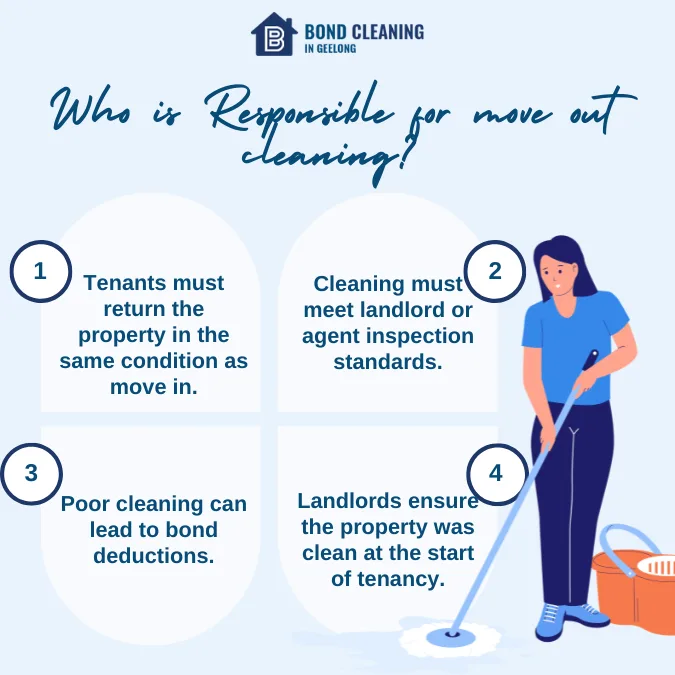
Infographic: Who is responsible for move out cleaning?
Wrapping Up
The responsibility for bond cleaning largely falls on tenants but landlords also play a role in setting fair expectations and providing accurate documentation. A clear understanding of these responsibilities helps both parties avoid unnecessary stress and disputes at the end of a lease. Ultimately, a well cleaned property benefits everyone involved. It secures the tenant’s bond and prepares the space for its next chapter.