


How To Mop Floorboards Without Damaging Them?
No one would disagree about the fact that floorboards, whatever wood type they may be made of, bring a lot of warmth and elegance to a space. But they can be surprisingly delicate despite their reputation for durability. Too much water, the wrong cleaning product or even an overly harsh mop, could leave behind stains, warping or scratches that can dull its appearance. The good news is that, there is a right way to clean and keep them looking spotless without risking any damage.
This blog shall discuss the correct method to maintain your floorboards without causing them unnecessary damage. It will talk about intricate things like using the right mop, limiting exposure to moisture and sticking to gentle cleaning solutions to ensure that none of your efforts are wasted. And when you pair all these up with the services of expert end of lease cleaning Geelong, you can rest assured that you’ll get your deposit back while ensuring that the floorboards remain in excellent condition for years.
Hide
Show
- What Material Is Your Floorboard?
- Choose the Right Mop for the Floorboards
- Sweep or Vacuum the Floor Boards First
- Use Gentle Cleaning Solutions For The Floors
- Mop the floors in Sections and Dry Immediately
- Maintain a Regular Floor Cleaning Routine
- Bonus Tips for Protecting Floorboards
- Infographic On Mopping Your Floorboards without Risk of Damage
- Wrapping Up
1. What Material Is Your Floorboard?
Not all wood floors are the same. Some may be made of hardwood, some from engineered timber, some made of laminate, etc., and all of these have different finishes and moisture tolerance levels. For example, engineered timber may be more resistant to swelling than solid hardwood, but both can still be damaged if exposed to too much water. Before you begin cleaning, check whether your floors are sealed, polished or waxed. Sealed boards are less porous and can tolerate light damp mopping while waxed or unsealed boards are far more vulnerable and require a dry cleaning method.
2. Choose the Right Mop for the Floorboards
The mop you use matters more than you might think. String mops and sponge mops tend to hold excess water, which can drip onto the boards and seep into the seams. Instead, opt for a microfibre flat mop. Microfibre traps dust and dirt effectively, and when only slightly damp, it allows you to clean the surface without leaving puddles behind. Always wring out your mop thoroughly before applying it to the floor. A good test is to ensure the mop is just damp to the touch, not dripping wet.
3. Sweep or Vacuum the Floor Boards First
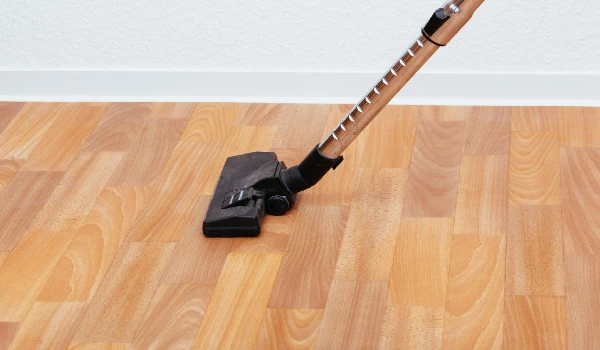
Mopping should never be your first step. Dust, sand and tiny debris can scratch the surface of floorboards when its dragged around with a mop. Begin by sweeping them with a soft bristled broom or using a vacuum designed for hard floors. Be extra mindful and use a vacuum head that does not have a rotating brush, as the bristles can scuff the surface of the wood. When you remove all the dirt beforehand, you reduce the risk of scratches occurring and also make the process of mopping far more effective.
4. Use Gentle Cleaning Solutions For The Floors
Less is more when it comes to using cleaning products for wood. Harsh chemicals, ammonia based cleaners, or abrasive powders can remove the finish and dull the shine of the wood. So instead of these, choose a pH neutral cleaning solutions that is specifically made for timber floors. In some cases, even a small amount of mild dish soap that has been diluted in warm water will do the job.
Another tip is to not use vinegar in high concentrations. It may be able to cut through the grease, but it can also erode the protective coating of your floorboards over time. Hence, for those doing a deeper clean as part of the moving out process, pairing these gentle solutions with specialist end of lease cleaning Geelong packages can ensure that both hygiene and property standards are met.
5. Mop the floors in Sections and Dry Immediately
When you are mopping your floorboards, divide it into small sections and go over each of them individually. This allows you to control the amount of moisture applied, making it easier to dry the area rapidly. When moving the mop, make sure to always follow the pattern of the wood to avoid streaks and preserve the boards’ natural appearance.
After each segment, use a clean, dry microfibre cloth /towel to remove any remaining moisture. If you find standing water, even little droplets, they should be dried promptly since they can soak into joints and create swelling or warping in the wood over time.
6. Maintain a Regular Floor Cleaning Routine
When it comes to maintaining floorboards, prevention is always preferable to cure. Instead of waiting for dirt to accumulate, aim for a light sweep or vacuum every few days, followed by a damp mop weekly or fortnightly, depending on the amount of traffic these floors receive. Spills should be cleaned up immediately, since liquids left on wood can cause long term damage.
Area rugs in high traffic areas, such as hallways and entryways, can help to reduce wear and tear. For renters, staying on top of maintenance will make life much easier when organising trusted end of lease cleaning Geelong services for an upcoming home inspection.
7. Bonus Tips for Protecting Floorboards
Aside from cleaning, there are a variety of additional behaviours you may develop to assist in extending the life of your floors. Whenever you need to move chairs or tables place felt pads beneath the legs to protect the floors from scratches. High heels might dent the boards, so avoid treading on them. Keep indoor humidity levels as regulated as possible (too dry and boards will shrink; too humid and they will expand). Finally, resealing or polishing your floors every few years can restore their brilliance and provide a protective layer against daily wear.
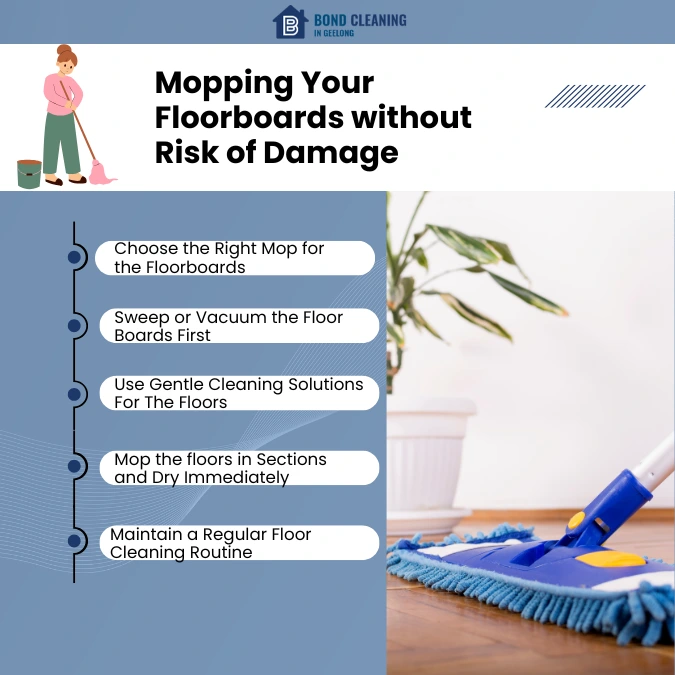
Infographic On Mopping Your Floorboards without Risk of Damage
Wrapping Up
Mopping floorboards need not be risky. By understanding your floor type, using the right mop, keeping solutions gentle, and minimising moisture, you can enjoy spotless floors without causing harm. A regular routine combined with simple protective habits will help your floorboards stay strong, shiny, and beautiful for years to come. Happy Cleaning!